
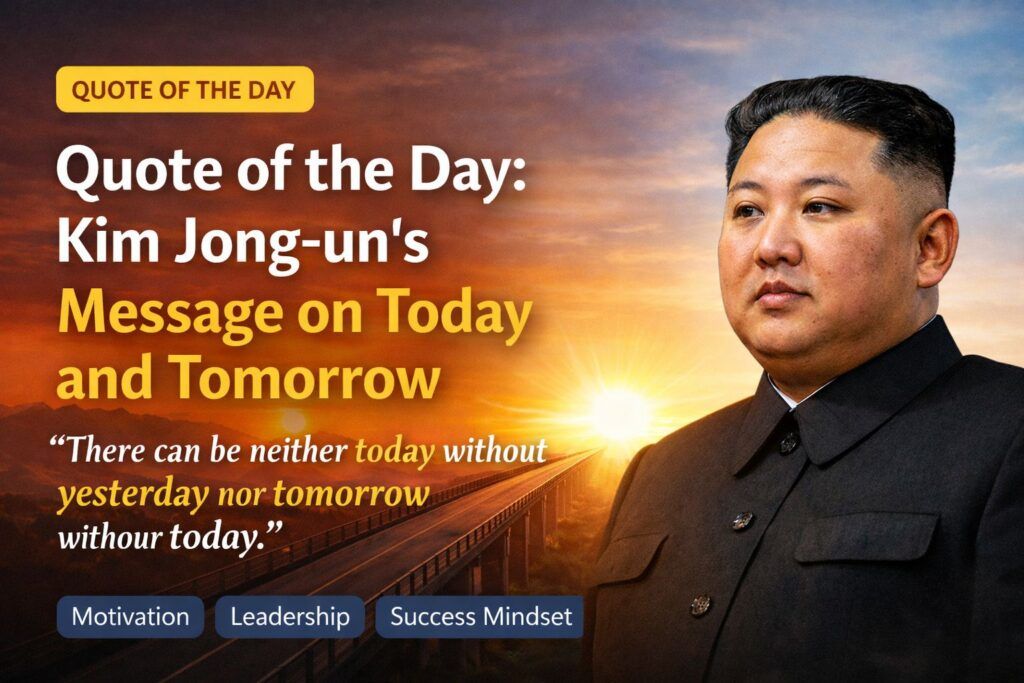
“There can be neither today without yesterday nor tomorrow without today.”
This widely shared quote attributed to North Korean leader Kim Jong-un carries a simple but powerful idea: nothing exists in isolation. The present is shaped by the past, and the future depends entirely on what we do right now.
What the quote really means
At its core, the message is about continuity. Today isn’t something we create from scratch. It is built on past decisions, past systems, and past experiences. In the same way, tomorrow won’t magically improve on its own. It will be a direct result of the choices we make today.
In leadership and business, this becomes even more relevant. Organizations are not built overnight. Their reputation, culture, and strategy develop over time. Ignoring history or trying to reinvent everything from zero can often lead to mistakes.
At the same time, the quote doesn’t support staying stuck in the past. The second half — “nor tomorrow without today” — is where the real action lies. It highlights responsibility. What leaders and individuals do today becomes the foundation for future success or failure.
Why this idea connects in today’s world
In today’s fast-moving business environment, companies often chase disruption, speed, and constant change. While innovation is important, completely disconnecting from past learnings can be risky.
Successful organizations usually balance both:
- They respect what has worked before
- They adapt based on current needs
- They build carefully for the future
This idea of continuity is especially important in areas like finance, leadership, and long-term planning—where decisions made today can have lasting consequences.
How you can apply this thinking
This quote isn’t just philosophical. It can be applied in practical ways:
- Look at your current goals and trace them back to past decisions. This helps you understand where you stand today.
- Preserve important knowledge, especially from experienced people, instead of losing it over time.
- Learn from past successes and failures instead of repeating the same mistakes.
- Plan future goals by connecting them clearly with what you’re doing right now.
- Regularly review what still works and remove what no longer adds value.
Final takeaway
The message is straightforward: progress is a chain. Break the link between past, present, and future—and growth becomes unstable.
Whether in business, career, or personal finance, the smartest move is not just to focus on what’s next, but to understand what came before—and act wisely today.